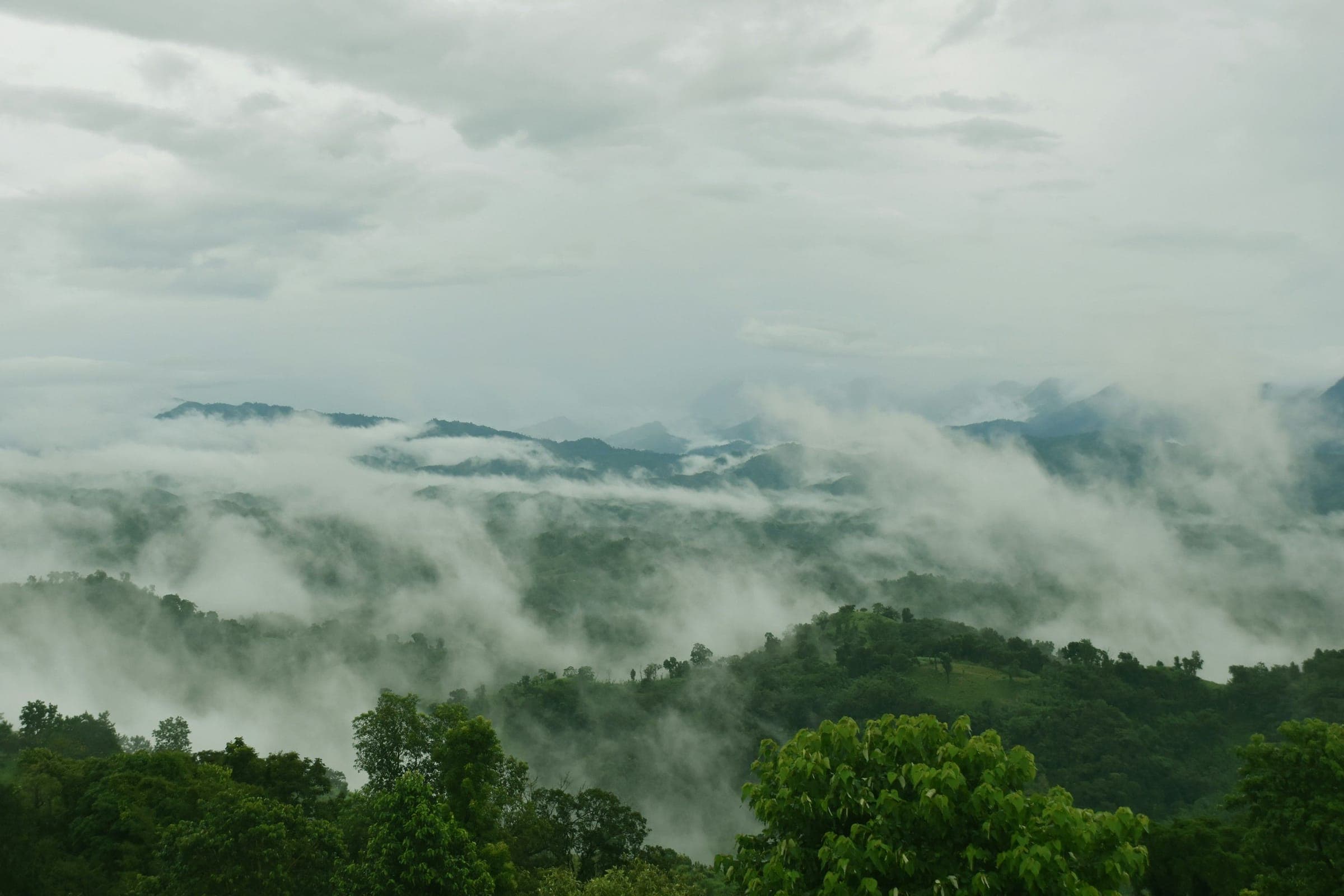
TravelSajek Valley, Rangamati
Sajek Valley in monsoon: walking above the clouds
Three days on a ridge in the Chittagong Hill Tracts in August, when cloud fills the valley each morning and the road is half the story.
Scroll to begin
- Place
- Sajek Valley, Rangamati, Bangladesh
- Trip
- August 2026
- Duration
- 3 days
- Season
- Monsoon · Jun–Sep
- From Dhaka
- ≈ 10–11 hours
- Altitude
- ≈ 450–550 m
- Best for
- Clouds at dawn
- Walking
- Easy–moderate

Everyone who has been to Sajek tells you about the clouds. Nobody tells you about the hour before the clouds, when you are standing in the dark on a wet ridge with a cup of tea going cold in your hand, wondering if you got up at five for nothing.
I went in the middle of August, at the height of the monsoon, against the advice of several friends who said I would see nothing but rain. They were partly right. I also saw the best morning of my year.
This is a long account of three short days: the road in, the morning that made the trip, the walk up to Konglak, and the things I would change. The practical details are collected in the field guide, so skip straight there if you are packing tonight.
Sajek Valley, Rangamati
The route
- 1Dhaka
- 2Khagrachari
- 3Dighinala
- 4Sajek
Chapter 1
The road is half the story
Sajek sits in Rangamati district, but almost everyone reaches it from Khagrachari, on the other side of the hills. Rangamati is the address; Khagrachari is the door. I took a night bus from Dhaka that left a little after ten and spent the night in the particular half-sleep of Bangladeshi highways: the horn of a passing truck, a tea stop where everyone climbed down blinking under the strip lights, and then, somewhere in the small hours, the change in the engine note as the bus began to lean into bends. I arrived at Khagrachari a little after dawn, stiff and hungry and already damp.
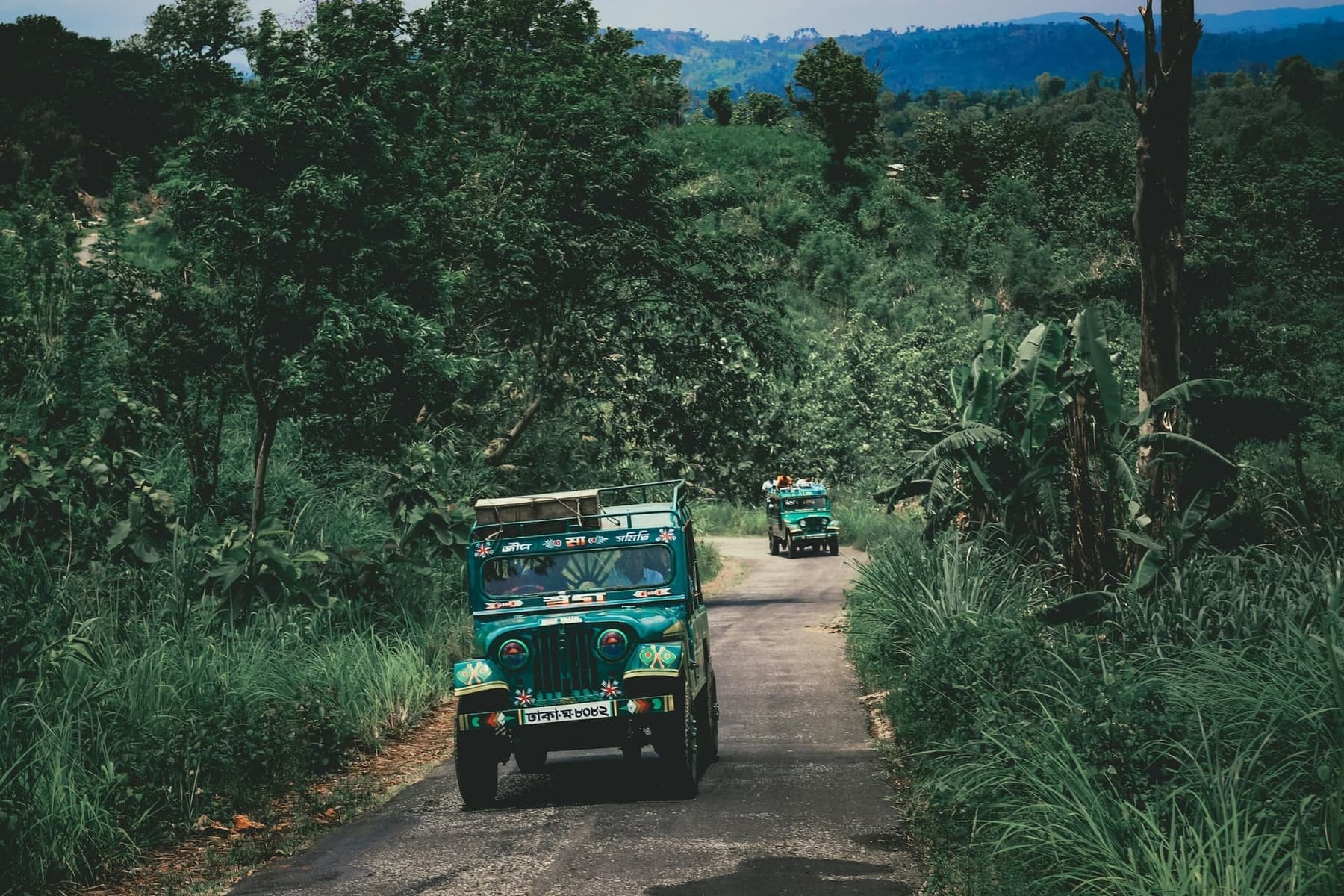
From there the journey is by jeep. The local ones are called chander gari, open-backed and painted in bright colours, with benches along the sides and a canvas roof that keeps out some of the rain. Most are hired for the whole trip, there and back, and the cost is split between whoever fits on the benches. We shared ours with a family from Chattogram and two university students who had brought a speaker and, mercifully, forgot to charge it. The family had a tiffin carrier full of parathas and fried egg, and by the first bend we had been fed.
The road climbs through Dighinala and then into the hills proper. It is narrow, freshly repaired in places and freshly broken in others. Where the tarmac has gone, the driver drops a gear, the whole jeep tilts, and everyone grabs the rail and laughs a little too loudly. Every bend opens onto another valley, each one greener than the last. In August the green is almost unreasonable. The hill rice on the slopes was knee-high, and the bamboo along the road was bent over with the weight of water.
Children waved from the roadside and some ran alongside for a few metres, laughing. Our driver waved back at all of them and seemed to know half of their parents. He also knew every pothole by name, or drove as if he did.
The final stretch runs in a convoy at set times. At the army checkpoint everyone writes their names in a register, the jeeps line up, and then you wait, which means more tea. The stall by the checkpoint made a strong, sweet cup and sold bananas so small they were gone in two bites. I ate six. When the convoy finally moved, it went like a slow, colourful train, jeep after jeep nose to tail, climbing into cloud that had come down to meet the road.
The last hour is the steepest. There are stretches where the road runs along the spine of a hill with nothing on either side but air and the tops of trees. I am not usually nervous in vehicles, and I was not exactly nervous then, but I noticed that I had stopped talking.
A practical note, since this is the part that catches people out. Convoy times are set by the authorities and can change, so check them the day before. Miss the morning convoy and you wait for the afternoon one, then arrive with barely enough light to find your cottage. Our run from Khagrachari took around three hours including the wait. Allow more in heavy rain, and plan nothing for the first afternoon except arriving.
Chapter 2
Waking above the cloud
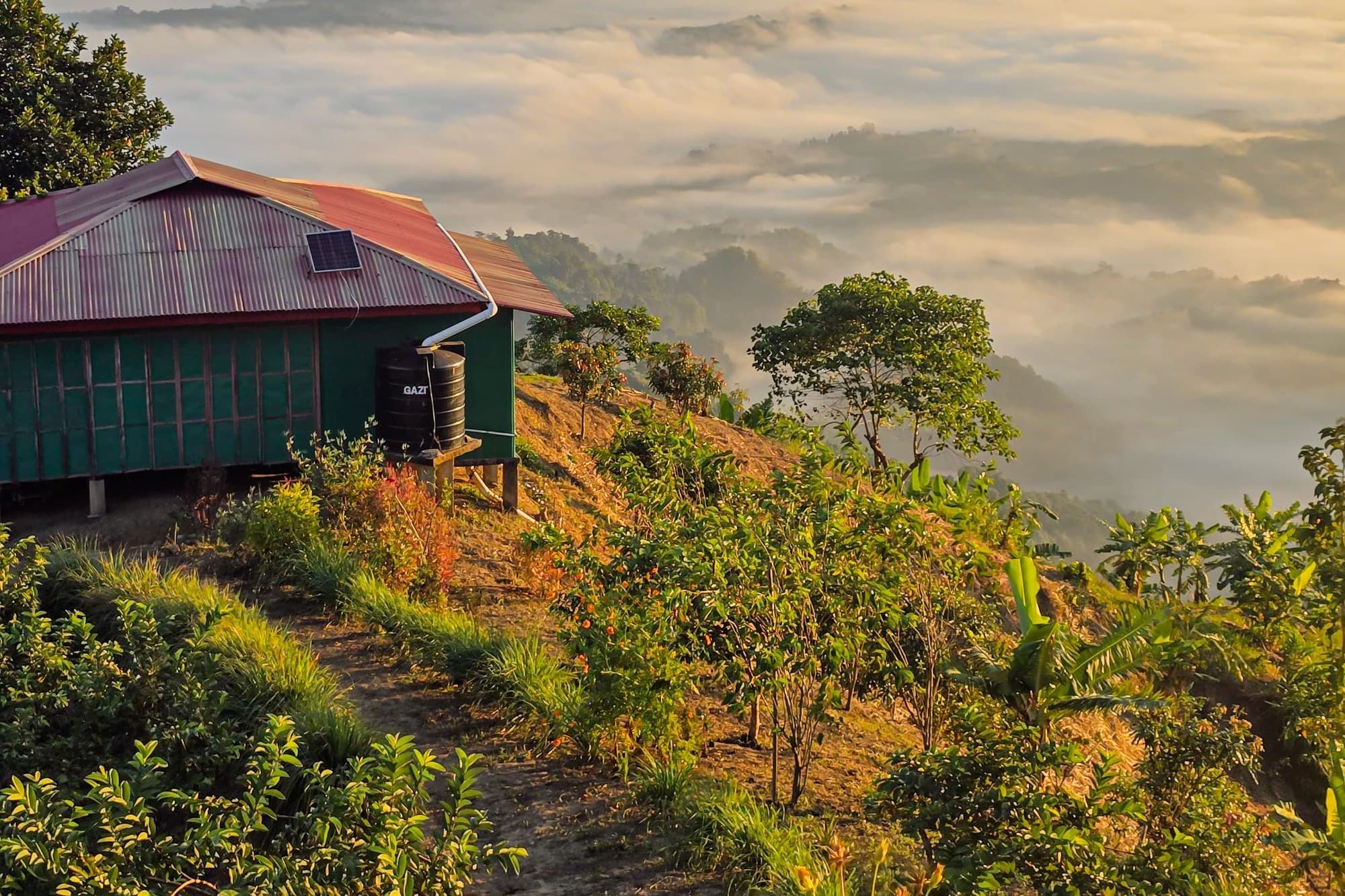
Ruilui Para, where most visitors stay, is strung along the top of the ridge: one main road, cottages and small restaurants on both sides, and behind them a drop so steep that the back balconies seem to hang over nothing. Our cottage was simple. Bamboo walls, a tin roof, a narrow balcony facing west over the valley, two beds, a bucket, and a handwritten sign asking guests to use water carefully because it is carried up. Power came from solar panels and a generator that ran for a few hours in the evening. I mention this not to complain but to set expectations. Sajek is a ridge, not a town, and everything on it came up the road you just came up.
That first evening the rain came in sideways and we saw nothing at all. We ate dinner on plastic chairs with a view of solid white and went to bed early, which was the only sensible thing to do.
The second morning I was up before five. It was still dark and still drizzling, and I stood on the balcony feeling foolish. A few other balconies had people on them too, dim shapes holding phones, waiting. Somebody's kettle was going. Down the road a generator coughed and gave up.
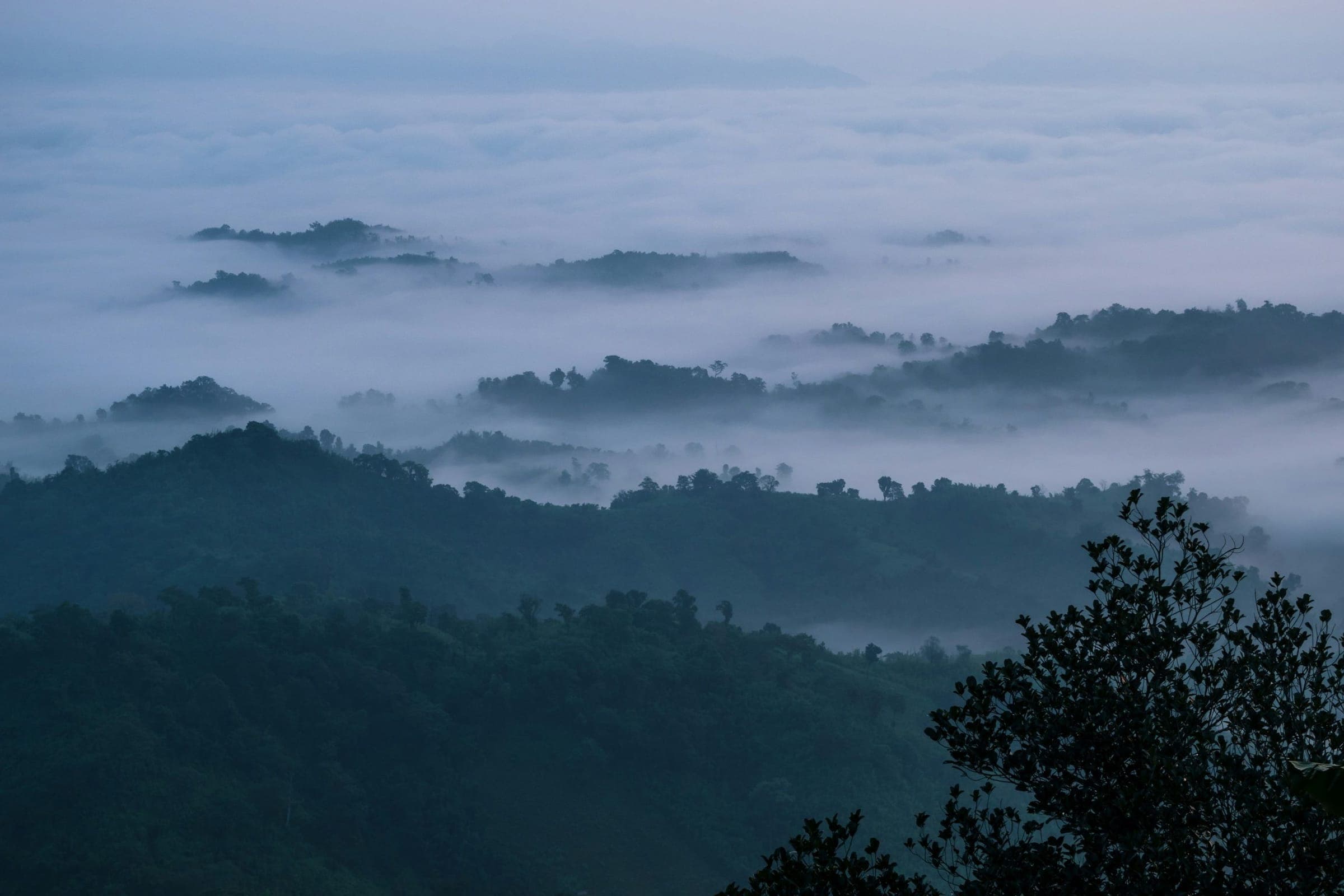
Then, slowly, the light came, and with it the shape of what was below us.
The valley was gone. In its place was a white sea, perfectly still, with the tops of the far hills standing up out of it like islands. The nearest ridges were dark green, the next ones blue, and the furthest barely there at all, a grey line drawn with a pencil that was running out. As the sun climbed behind us, the cloud took on a faint pink, then gold, then went white again.
Then it began to move. It broke up slowly at first and then all at once, drifting and pouring over the low passes like milk over the lip of a pan, filling the gaps between ridges and draining out of others. Within an hour it had thinned to mist. By eight the valley was back, green and steaming, with a thread of river I had not known was there catching the light at the bottom.
I have seen many photographs of this. None of them prepared me for how quiet it was. Nobody on the balconies said much. There were birds, a rooster somewhere below, and the small, wet sounds of a hillside drying out.
Two things are worth knowing if you want to see it. First, the cloud sea needs a wet valley and a still night, which is why the monsoon and the weeks after it are the best time, and why it does not happen every morning. We got one good morning out of two. Second, your view depends on which side of the ridge you sleep on. Rooms on the valley side cost more and are worth it; ask which way the balcony faces when you book. The helipad near the end of the ridge is the popular public spot, and by half past five it is already crowded.
Chapter 3
Up to Konglak
On the second afternoon we walked up to Konglak Para, a small Lushai village on the highest point nearby. It is a short drive from Ruilui to the bottom of the path, or a pleasant walk along the ridge road if the rain allows. From there the climb is short, around half an hour, but steep, and in August it is mostly mud. A boy selling bamboo walking sticks at the bottom saw our shoes and doubled his price. We paid it gladly, and by the third switchback I would have paid it again.
The path goes up in steps cut into red clay, some edged with bamboo, some simply worn smooth by feet. The rain had turned the steps into small slides. People coming down moved sideways like crabs, holding on to tufts of grass. A man carrying two jerrycans of water passed us going up, in rubber sandals, without breathing hard. I tried not to take it personally.
Halfway up I stopped to let my heart settle and noticed a leech on my sock, then another. They are harmless and slow, but they are patient, and in the monsoon they wait on the grass along every path. Long socks pulled over your trousers help. Salt helps. Not looking down too often also helps.
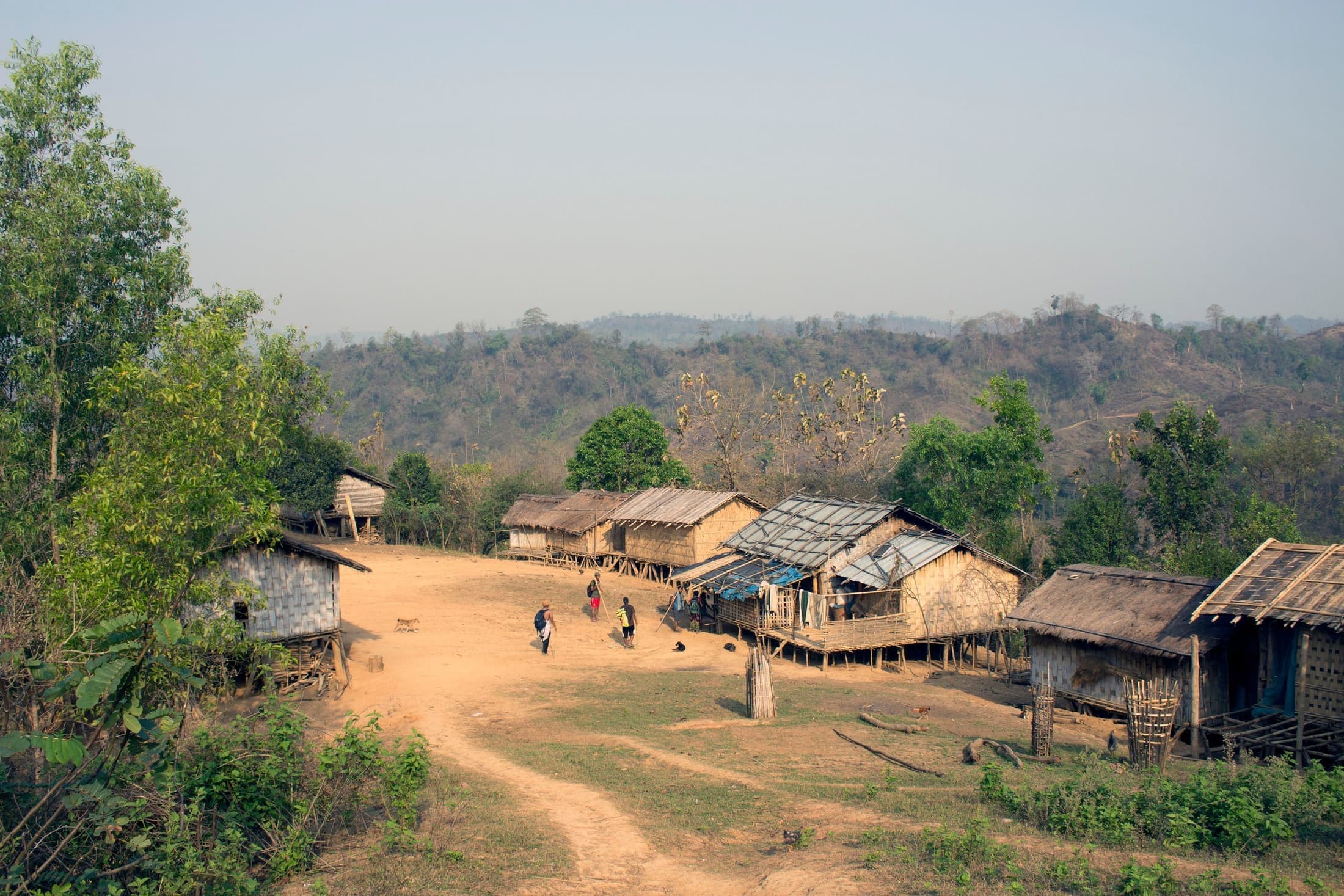
At the top there is a cluster of houses, a few tea stalls and a view that seems to go all the way to Mizoram. The houses are wooden, raised a little on posts, with tin roofs and narrow verandas, and some have small gardens fenced with split bamboo. Women were drying clothes on lines strung between posts, though the air was so wet I could not see how anything would ever dry. A dog slept on the warm stones and did not move for anyone. Two small boys played with a bicycle wheel and a stick and ignored us completely, which felt correct.
We drank lemon tea at a stall run by a woman who asked where we had come from and told us, kindly, that we had come at the wrong time of year. In winter, she said, you can see much further. I said we had seen the clouds that morning. She nodded as if that settled the matter in our favour and refilled the cups.
Then we sat and watched the weather walk across the hills. That is the best way I can describe it. A storm would gather over a ridge to the east, a grey column with a ragged base, and you could follow it across the valley as it darkened one hillside after another and moved on. Sometimes it came for us and we ducked under the stall's roof. Sometimes it changed its mind.
It is worth remembering, up there, that Konglak is a village before it is a viewpoint. People live in these houses, and visitors arrive every afternoon whether the residents feel like company or not. We kept our voices down, asked before taking any photograph with a person in it, and bought our tea and biscuits at the top rather than carrying our own. It is not much. It seemed like the least we could do.
Start down before the light goes. The muddy steps are far harder in the dark, and nobody sells torches at the top.
Chapter 4
What I would do differently
Sajek has changed quickly. People who went ten years ago describe a handful of cottages and one or two places to eat. Now there are more cottages every year, more generators, more noise on weekends and more signboards competing for the same view. It is easy to treat it as a viewpoint and forget it is also a place where people live, and where the arrival of tourism has not been simple for everyone. Land, water and who keeps the money are real questions here, and I am not the person to answer them. I can only say that a visitor and a resident see the same ridge very differently, and it is worth knowing that before you arrive.
If I went again, I would go on weekdays. Our first night on the ridge was quiet enough to hear frogs. Our second fell on a weekend and came with speakers.
I would stay one night longer. Three days sounds like plenty, but most of the first and last are travel, and the cloud does not perform on request. Two full mornings on the ridge double your chances. Three might even leave you a little bored, which would be no bad thing.
I would spend less time on the balcony and more time on the side paths. On the last morning I followed a narrow track off the main road behind a row of cottages, and within five minutes the ridge was a different place: bamboo houses, a man splitting firewood, banana plants heavy with fruit, a small church with its door open. The people I met there were not selling anything. When the track ran out, one of them pointed me back the way I had come, and I was grateful, because I would not have found it on my own.
I would pack better. My rain jacket was fine; my shoes were not. Sandals with a good grip would have been more honest than trainers pretending to be waterproof. I would bring a power bank, a small torch and more cash than seemed necessary, because cards are rarely an option on the ridge and the nearest cash machine is a long way back down the road.
I would order dinner earlier. The restaurants cook to order, and bamboo chicken in particular takes time, so most places ask you to choose in the afternoon. We learned this when we turned up hungry at eight and were offered rice and egg, which was fine, but was not bamboo chicken.
And I would still go in the monsoon. The rain is real, and so are the leeches, and there will be at least one evening when you see nothing but white. But the clouds only come out like that when the valley is wet. For one hour on one morning I stood above them, cold tea in hand, and did not want to be anywhere else.
Gallery
7 photos · →
Ruilui Para, where the back balconies seem to hang over nothing. The cup that went cold while I waited for the light. The first evening, when we saw nothing at all. Bamboo chicken, worth ordering early. Laundry at Konglak, optimistic in that air. From the helipad at dusk, ridges all the way to the border. The checkpoint stall. I ate six of the bananas.
Sajek Valley, Rangamati
Field guide
Budget per person
৳7500–13000
Per person for 3 days from Dhaka, sharing a jeep and a room: return night bus, chander gari, two nights in a mid-range cottage, meals and entry fees. Jeep and cottage prices rise on weekends and holidays.
- How to get there
- Take a night bus from Dhaka to Khagrachari (around 7 to 8 hours), then hire or share a jeep, known locally as a chander gari, via Dighinala to Sajek. The final stretch usually runs in an escorted convoy that leaves at set times, often mid-morning and mid-afternoon, so check the current schedule before you go.
- Best time to go
- July to November for drifting cloud and deep green hills; December to February for clearer views and cool nights. Weekdays are far quieter than weekends and holidays.
- Where to stay
- Cottages and small resorts in Ruilui Para, the main settlement along the ridge. Rooms facing the valley cost more and are worth booking ahead, especially on weekends. Expect solar power, a generator for a few evening hours and water that has been carried up the hill.
- What to eat
- Bamboo chicken, cooked slowly inside a hollow bamboo tube, is the dish everyone orders, and most restaurants want the order by afternoon. Simple rice, dal and hill vegetables are easy to find, and the lemon tea at Konglak is worth the climb.
- Permits & rules
- Bangladeshi visitors register their names at the army checkpoint on the way in and travel the last stretch in an escorted convoy; a small entry fee is usually collected. Foreign nationals have generally needed advance permission to visit the Chittagong Hill Tracts, so check the current rules well before you plan.
What to pack
- Light rain jacket
- Sandals or shoes with real grip
- Long socks, and a little salt for leeches
- Power bank and a small torch
- Enough cash for the whole stay
- Motion-sickness tablets for the jeep
Tips
- 1.Mobile coverage is patchy and cash machines are scarce beyond Khagrachari, so carry enough money for the whole stay.
- 2.Bring a light rain jacket and shoes with real grip; the monsoon path up to Konglak Para is steep and muddy.
- 3.Sajek is home to Lushai, Pangkhua and Tripura communities. Ask before photographing people or their homes.
- 4.Check for travel advisories before you leave Dhaka, as access to the hill districts is sometimes restricted at short notice.
- 5.Order dinner in the afternoon. Bamboo chicken takes hours, and late arrivals get rice and egg.
- 6.Use water sparingly. It is trucked up to the ridge, and in a dry spell it runs short.
Nearby stories
Where next · Sreemangal, Moulvibazar
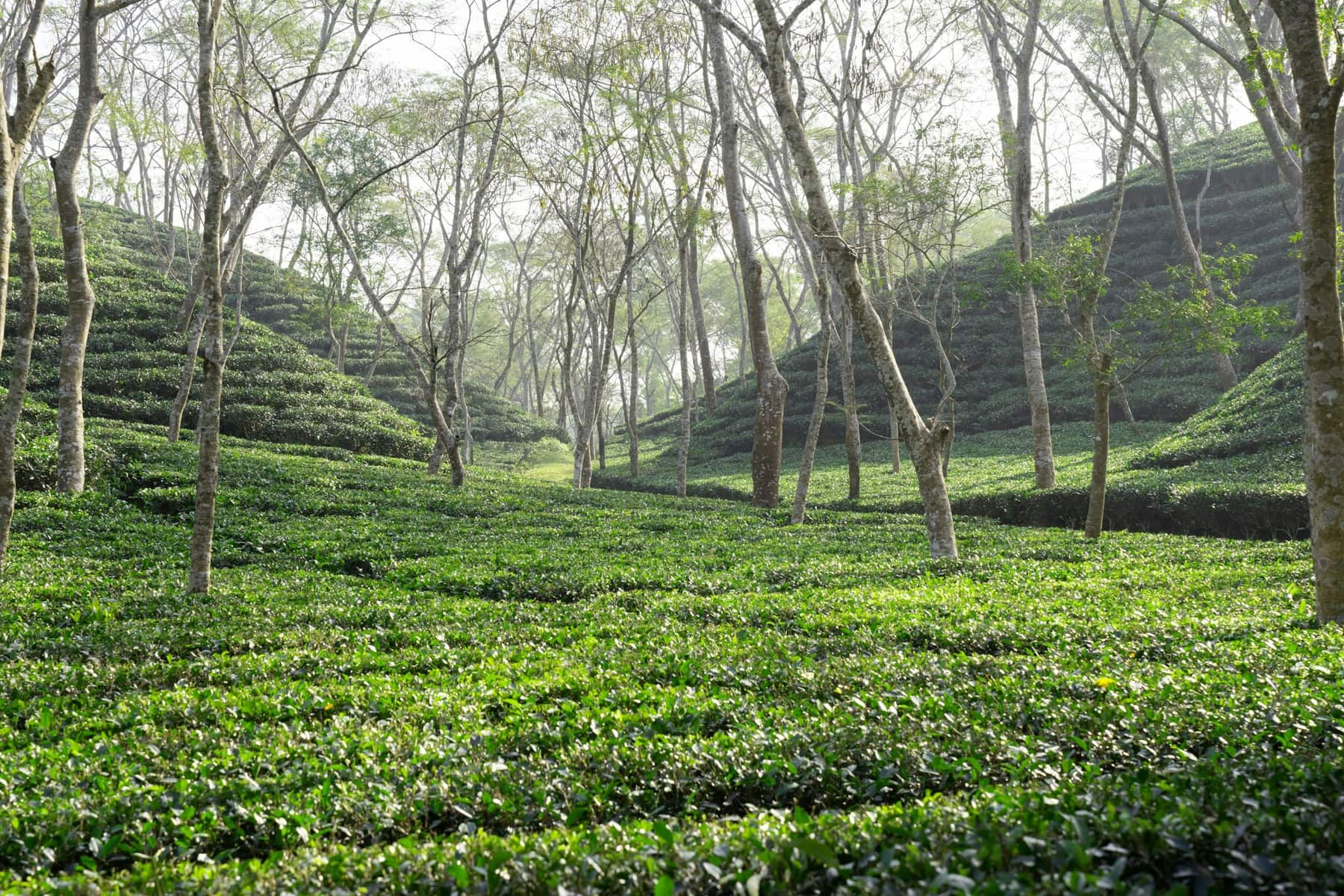
Sreemangal in the rain: two days among the tea gardens
Read the story