TravelSreemangal, Moulvibazar
Sreemangal in the rain: two days among the tea gardens
A slow weekend in Bangladesh's tea country, with a forest walk at Lawachara and more cups of tea than I can honestly count.
Scroll to begin
- Place
- Sreemangal, Moulvibazar, Bangladesh
- Trip
- July 2026
- Duration
- 2 days
- Season
- Monsoon · Jul
- From Dhaka
- ≈ 5 hours by train
- Days needed
- 2–3
- Best for
- Tea and rain
- Walking
- Easy

The train to Sreemangal leaves Dhaka in a hurry and arrives in no hurry at all. Somewhere after Bhairab the city falls away, the paddy fields begin, and by the time the low hills of the northeast appear you have stopped checking the time.
I went for two days in early July. It rained on and off the whole time, which was exactly what I wanted. The tea country in the monsoon is not a postcard so much as a mood: grey sky, green everything, and the sound of water on tin roofs wherever you stop.
Sreemangal, Moulvibazar
The route
- 1Dhaka
- 2Bhairab
- 3Sreemangal
- 4Lawachara National Park
Chapter 1
Rows that follow the hills
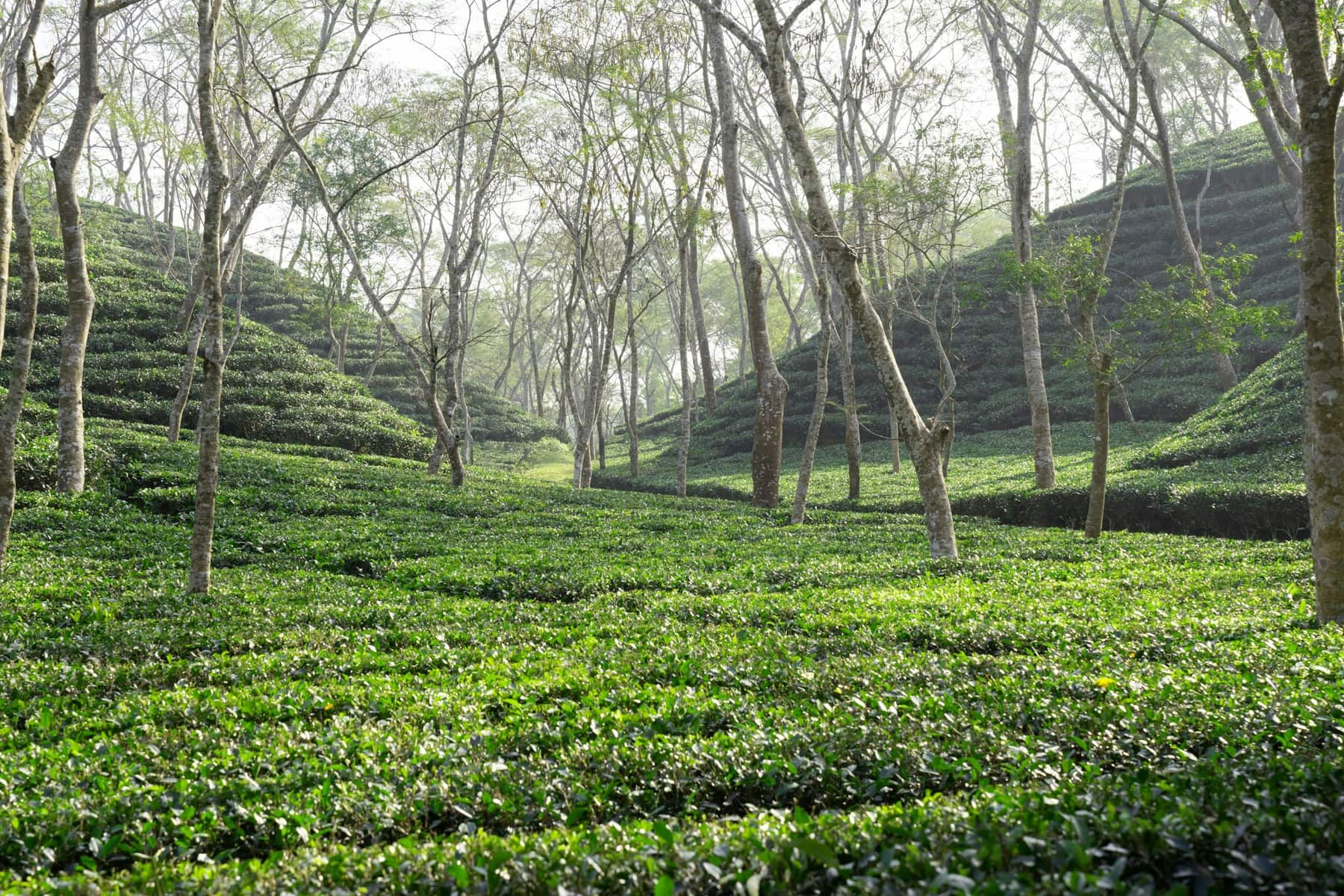
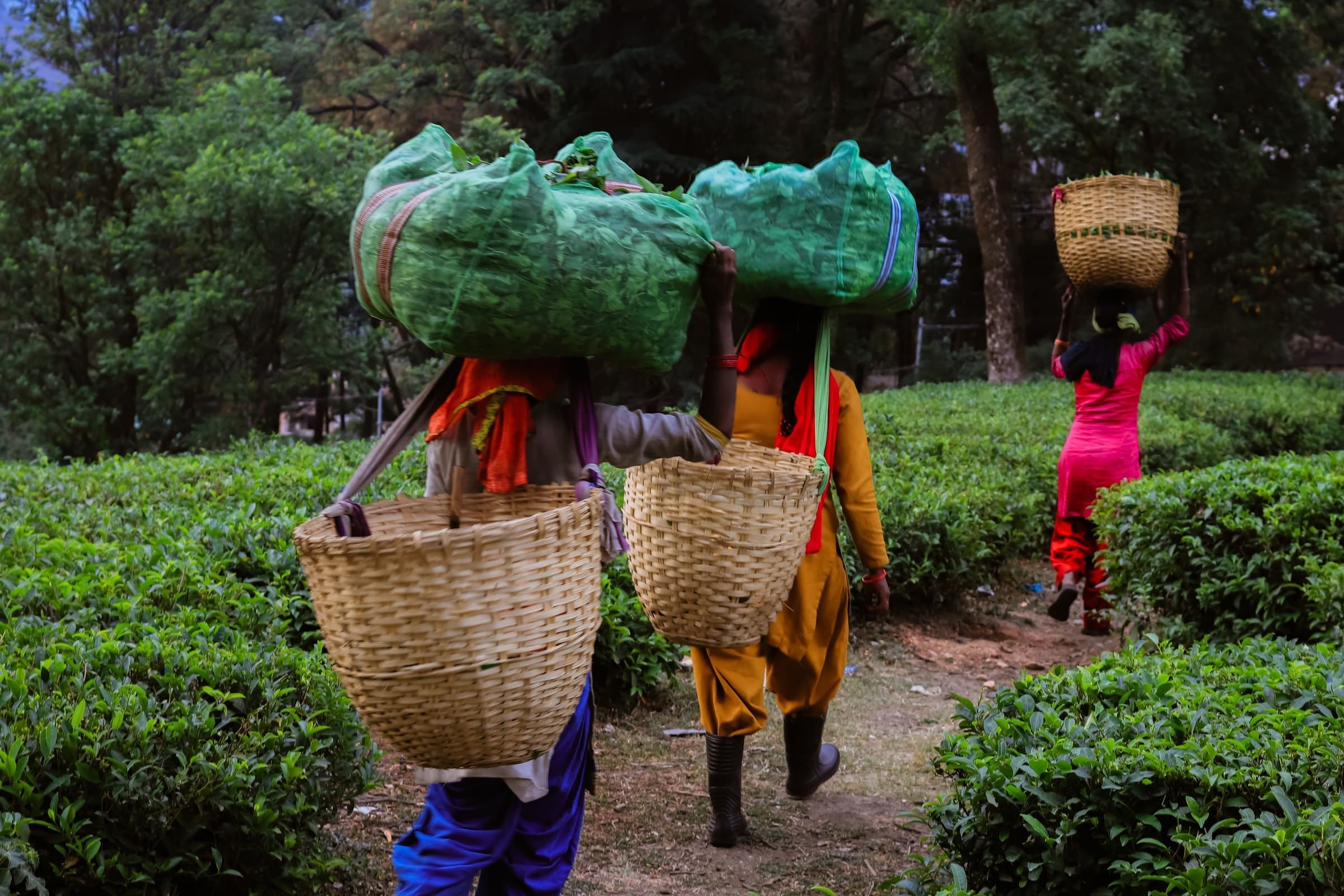
The first thing you notice about the tea gardens is the order. The bushes are clipped to waist height and planted in rows that curve with every contour of the land, so the hills look combed. Above them, at regular intervals, stand tall shade trees with thin, pale trunks. In the rain, everything is a single green, and the only other colour is the bright cloth of the women plucking leaves.
They work quickly, with baskets on their backs held by a strap across the forehead, picking only the top two leaves and a bud. Their hands move faster than I could follow. Every so often a line of them would straighten up together and move a few rows along, talking among themselves, and then bend again. I watched for a long time from the edge of a path, under an umbrella that was losing the argument with the weather.
Most of the workers belong to communities whose families were brought here by colonial planters generations ago, and their wages and conditions have long been a subject of hard argument. It is worth remembering this while you admire the view. The beauty of the gardens is real, and so is the labour that keeps them. I kept to the paths, asked before taking photographs, and did not wander into the lines of houses where the workers live, which are homes and not part of the scenery.
I spent the first afternoon walking between estates on the roads out of town, hiring a CNG when the rain got serious. The estates have their own small worlds: a factory with a tall chimney, a manager's bungalow on a rise, a school, a temple, and miles of the same clipped green.

Chapter 2
Into Lawachara
On the second morning I hired a guide and walked into Lawachara National Park, a patch of rainforest a short drive from town. The railway line cuts straight through it, and at one point you walk along the tracks, which feels both slightly wrong and very beautiful. The guide listened for trains the way other people check their phones.
Inside the forest the air is thick and warm. Water drips from everything. Our guide stopped every few minutes to point at something I would have missed: a line of ants carrying leaves, a spider the size of my palm, a bird I could hear but never see. We heard hoolock gibbons calling somewhere above us, a rising, whooping sound that carried through the trees. We did not see them. The guide shrugged and said they were shy in the rain, like everyone else.
Lawachara is small, and the edges press in. You hear vehicles from the road and, now and then, a train. But for long stretches the forest closes over you and the world shrinks to wet leaves, birdsong and the squelch of your own shoes. The trails are short loops of around half an hour to three hours, and they are easy to lose, which is the best reason I know to hire a guide.
I came out with wet shoes and two leeches on my ankle, which the guide removed with a pinch of salt and great amusement.

Chapter 3
Tea, in every form
Sreemangal is famous for its layered tea, served in a glass with several bands of colour, each one a different flavour and a different sweetness. It is clever and worth trying once, if only to watch the person making it pour with that much patience. I drank mine in careful layers, which is not how anyone else seemed to drink it.
I preferred the ordinary cups, though: strong, milky and sweet, from a stall at the edge of a garden, poured from a height, drunk standing up while the rain came down on the tin roof. A cup cost a few taka and came with conversation if you wanted it and silence if you did not. One stall owner told me the best tea in the district never leaves the district. I could not prove him wrong.
On the way back from Lawachara we stopped at one of the estate shops that sell tea by weight, loose leaf in plain plastic bags with handwritten labels. The man there made me taste three grades side by side, slurping loudly to show me how, and then sold me the middle one, which he said was what he drank at home. It was the best advice I received all trip.
By my count I had nine cups on the second day. My count may be generous.

Chapter 4
Going slowly
Two days is enough to see the main sights and not nearly enough to settle in. Half the trip was the train, and the other half was spent trying to see things before the next shower. That was fine. It was also the wrong way round.
If I return, I would stay longer and do less: a morning walk through the gardens before the pluckers arrive, an afternoon with a book on a resort veranda, an evening at Baikka Beel, the wetland reserve outside town, to watch the light go on the water. I would let the rain set the timetable instead of trying to outrun it.
I would also go back in winter, just to compare. People in town told me the paths are dry then, the forest is easier to walk and the gibbons are easier to see. I believe them. I am still not sure I would trade the rain for it.
Sreemangal is not a place for ticking things off. It rewards sitting still, listening to rain, and letting one more cup of tea be the plan.
Gallery
7 photos · →
Two leaves and a bud, the part that gets plucked. Shade trees are planted among the bushes to keep the tea from scorching. Lawachara after rain, loud with insects. One morning's picking, waiting to be weighed. The ordinary cup, which I preferred. Somewhere after Bhairab, when I stopped checking the time. Pineapples and lemons, the other local crops.
Sreemangal, Moulvibazar
Field guide
Budget per person
৳4000–9000
Per person for 2 days from Dhaka, sharing a room: return train, one night in a town guesthouse (low) or a resort near the gardens (high), CNG rides, a Lawachara guide and meals.
- How to get there
- Intercity trains from Dhaka (Kamalapur or Airport station) reach Sreemangal in around five hours, and buses take a similar time depending on traffic. Book train tickets online a few days ahead, especially for weekends. In town, CNG auto-rickshaws can be hired by the hour for the gardens and Lawachara.
- Best time to go
- June to September for the deepest green and the plucking season in full swing; October to February for drier paths and easier forest walks.
- Where to stay
- Guesthouses in town are the cheapest option. Resorts along the road towards Lawachara and Kamalganj are quieter and closer to the gardens, and worth booking ahead for weekends.
- What to eat
- Try the layered tea once, best known from Nilkantha Tea Cabin, then go back to ordinary milk tea from a garden-edge stall. If a restaurant has shatkora, a sour Sylheti citrus cooked with beef or fish, order it.
What to pack
- Umbrella or light rain jacket
- Long socks and closed shoes
- A little salt for leeches
- Insect repellent
- Binoculars, if you have them
- A book for the veranda
Tips
- 1.Hire a local guide at Lawachara; the trails are easy to lose and guides know where the gibbons are likely to be.
- 2.In the monsoon, wear long socks and closed shoes, and check your ankles for leeches after forest walks.
- 3.The tea estates are working places. Keep to the paths and ask before walking into the workers' living quarters.
- 4.Go into Lawachara early in the morning, when the forest is quietest and the gibbons are most likely to call.
- 5.Thursday and Friday trains sell out quickly; book as soon as online sales open.
- 6.Carry cash. Tea stalls and CNG drivers rarely take cards.
Nearby stories
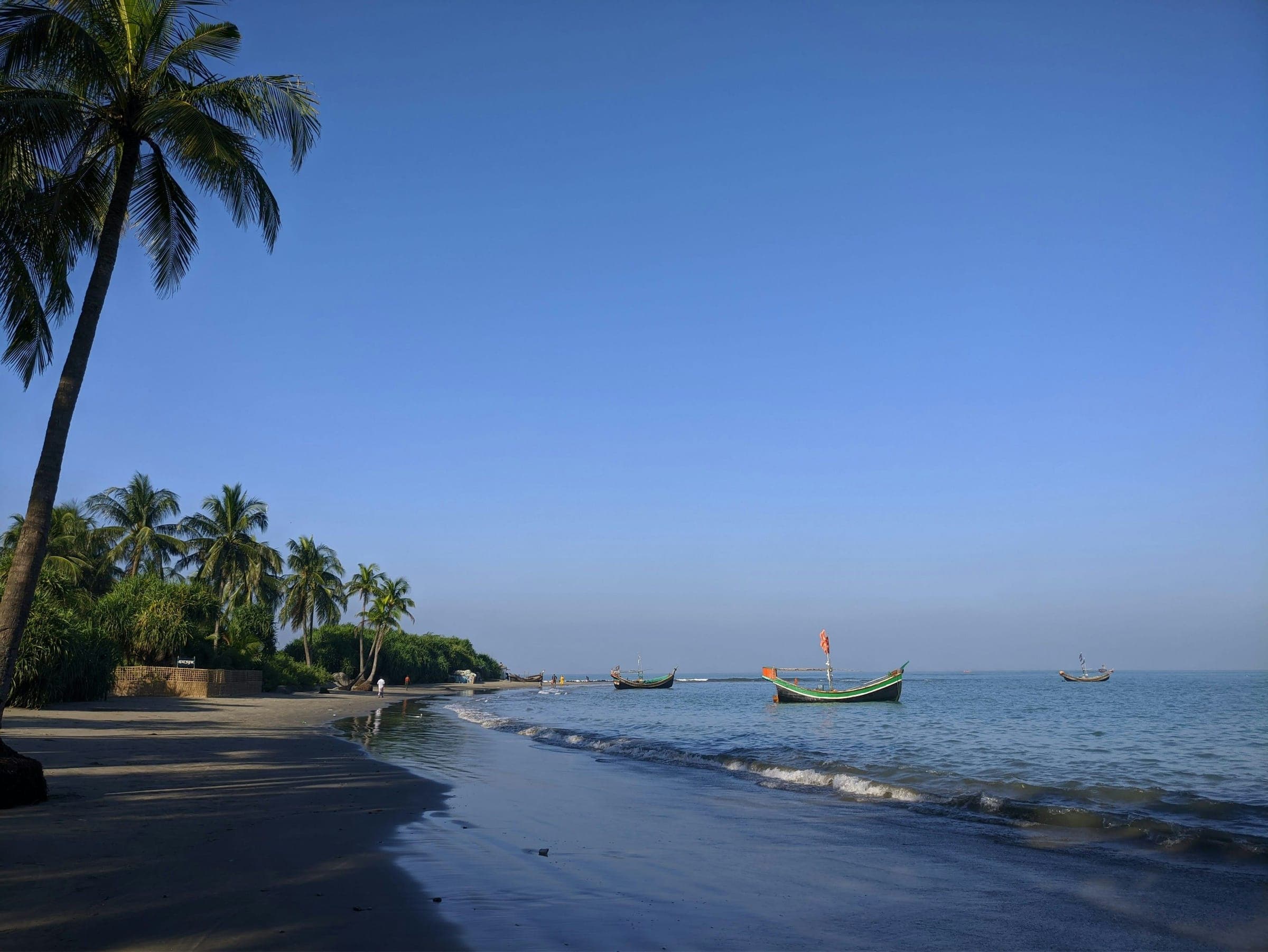
Where next · সেন্ট মার্টিন দ্বীপ, কক্সবাজার
নারিকেল জিঞ্জিরার নীল জল: শীতের শেষে সেন্ট মার্টিন দ্বীপে তিন দিন, আর একটি ভঙ্গুর প্রবালদ্বীপের কাছে নতজানু হওয়া
Read the story