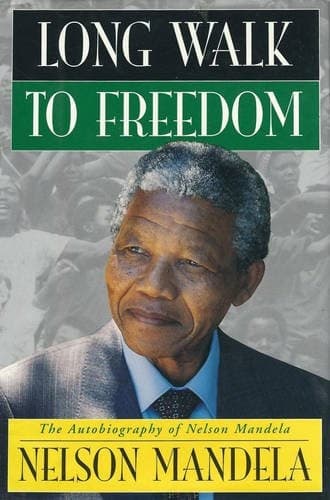

It took me nearly two months to read Long Walk to Freedom. For a while I felt guilty about that, as if I were failing the book. Then, somewhere around the prison years, I realised that the slowness was teaching me something the book could not say directly.
A life told without hurry
Mandela published the autobiography in 1994, the year he became South Africa's first democratically elected president. Much of it was first drafted in secret on Robben Island, which may explain its tone. It is the voice of a man who has had a great deal of time to think and has learned not to waste words on drama.
The early chapters, about his childhood in the rural Eastern Cape and his upbringing in a Thembu royal household, are unhurried and affectionate. He writes about cattle, stick fights, the rituals of becoming a man, and the old men who settled disputes by listening until everyone had spoken. You can see, even there, the habit of patience that will matter later.
Then comes Johannesburg: law practice, politics, the African National Congress, bans and arrests, the long Treason Trial, the turn to armed struggle, life underground. By the time of the Rivonia Trial in 1964, the pace has quickened, and then it stops.
The prison years
Mandela spent twenty-seven years in prison, eighteen of them on Robben Island. The chapters about this time are the heart of the book, and they are remarkable for how little self-pity they contain.
He describes the lime quarry where prisoners worked in glaring white light, the rules about letters and visits, the small negotiations with warders over clothing and food. He describes studying, arguing, gardening. The victories are tiny: long trousers instead of shorts, permission to study, a slightly longer visit. He treats them seriously, because they were what was available.
This is where I understood the slowness. Hope, in these pages, is not a feeling. It is a discipline, practised daily in very small ways, for years, without any promise that it will work.
The honest parts
What made me trust the book is what Mandela admits. He writes about the cost of his choices to his family, and about the children who grew up mostly without him. He does not resolve this guilt neatly. He leaves it on the page.
He also admits fear. The famous line, "I learned that courage was not the absence of fear, but the triumph over it", is not a boast. It comes from a man describing how often he was afraid and how he learned to act anyway, partly by watching others do it.
Reading it from here
As a Bangladeshi reader, I kept thinking of our own history of struggle, and of how quickly such histories are turned into slogans and portraits on walls. Mandela's book resists that. It is full of committees, disagreements, mistakes and long, dull stretches of waiting, which is what political change mostly consists of.
Should you read it?
Yes, but not in a hurry. Read a chapter a night. Let the prison years take as long as they take. The book is not trying to thrill you. It is trying to show you, from the inside, what it costs to keep going, and what it might look like to come out the other side without bitterness.
Highlights
I learned that courage was not the absence of fear, but the triumph over it.