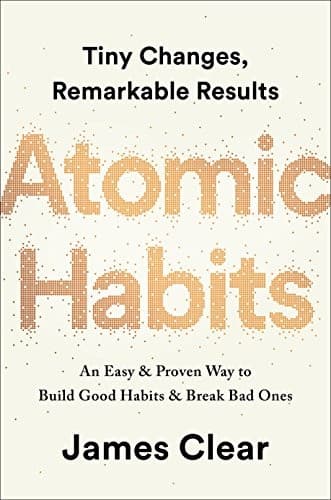

I came to Atomic Habits late, which is the usual way I come to bestsellers. By the time I opened it, I had already heard most of its ideas second-hand, in podcasts and in the confident summaries people share online. I expected to be bored. Instead I was mildly irritated for fifty pages and then, slowly, persuaded.
The one idea
The book's central claim fits on an index card: "You do not rise to the level of your goals. You fall to the level of your systems."
Clear's point is that winners and losers often share the same goals. Every team wants the trophy. Every student wants the good result. The goal does not separate them. What separates them is the daily machinery: when they practise, what they do first, what they have made easy and what they have made hard.
I have set a lot of goals in my life. Read more. Write every day. Walk more and scroll less. Most of them failed in the same way. I would decide, feel good about deciding, and then meet the same evening, the same chair and the same phone that had beaten me before. The goal changed. The system did not.
What actually changed for me
The chapters on environment were the ones I acted on. Clear argues that we overrate motivation and underrate the shape of the room we live in. The cue for a habit is often physical, and the easiest way to change a habit is to change what is in front of you.
So I made a few small, slightly embarrassing changes:
- The phone now charges in another room at night.
- Whatever book I am reading sits on the pillow in the morning, so I have to move it before I can lie down again.
- My notebook stays open on the desk, with the pen on top, rather than closed in a drawer.
None of this is clever. All of it worked better than any resolution I have made. The book's "two-minute rule", which says a new habit should start as something you can do in two minutes, sounded patronising until I tried it. Writing one sentence a day is a ridiculous goal. It is also one I have not broken in a month, and most days the one sentence becomes a page.
Who you are, not what you want
The other idea I keep returning to is identity. Clear suggests that lasting change comes less from targets than from deciding what kind of person you are, and then proving it to yourself with small actions. Each time you read, you cast a vote for being a reader.
I find this both useful and a little dangerous. Useful, because it turns a vague wish into a daily question: what would a person who writes do this morning? Dangerous, because identity can harden. I would rather be someone who writes than "a writer" who has to protect the title.
The weaknesses
The book is repetitive. Many chapters could be half as long. The famous arithmetic about getting one percent better every day is neat, but life does not compound so smoothly, and Clear knows it. Some of the science is borrowed from behavioural psychology and simplified for easy reading, which is fine for a popular book but worth knowing.
It is also a very individual book. It says little about the people and pressures around us, which shape our habits as much as any cue on a desk.
Still, four stars, because it did what few self-help books do for me: it changed what I did on an ordinary Tuesday. That is a higher bar than it sounds.
Highlights
You do not rise to the level of your goals. You fall to the level of your systems.