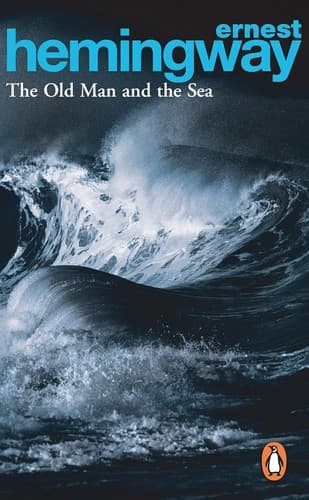

The first time I read The Old Man and the Sea, I thought it was a story about fishing. The second time, I thought it was a story about pride. This summer I read it again, in one sitting on a hot afternoon, and I think it may be a story about what you are left with when everything you worked for is taken away.
The plot, which is almost nothing
Santiago is an old Cuban fisherman who has gone eighty-four days without catching a fish. The boy who used to fish with him has been sent to another boat by his parents, because the old man is unlucky. On the eighty-fifth day, Santiago rows out further than usual and hooks a marlin so large that it tows his skiff out to sea.
For days the man and the fish are tied together by a single line. He talks to his hands when they cramp. He talks to a small bird that lands on the boat. He talks to the fish, and calls it his brother. When he finally kills it and lashes it to the side of the skiff, the sharks come, and keep coming, and by the time he reaches the harbour there is nothing left but the skeleton.
That is the whole story. Hemingway tells it in plain sentences, with very few adjectives, and almost no explanation.
Why it works
I used to think the plainness was a trick. Now I think it is a form of respect. Hemingway does not tell you what Santiago feels. He tells you what Santiago does: how he holds the line across his back, how he eats raw fish to keep his strength, how he counts what he still has. The feeling is yours to supply.
The line everyone remembers comes in the middle of the shark attacks: "A man can be destroyed but not defeated." Taken out of the book, it sounds like a slogan. Inside the book, it is closer to a stubborn private argument. Santiago says it to himself because nobody else is there to say it to him.
What I noticed this time was the tenderness. The old man dreams of lions playing on a beach in Africa, which he saw as a young sailor. He follows baseball and worries about his hero's bone spur. He and the boy keep up a gentle daily pretence about a pot of yellow rice and fish that does not exist. For a book with a reputation for toughness, it is full of small care.
A reader's note from the Bay of Bengal
I read it a few weeks after a trip to the coast, where I had watched fishing boats come in at dawn. Some had done well and some had not, and you could tell which was which before they reached the sand, from the way the men sat. Nobody made speeches. They pulled the boats up, sorted what there was, and talked about tomorrow's weather.
Santiago would have understood them. One of his quieter lines, "Every day is a new day", is not optimism exactly. It is a working method. You go out again because that is what the work is.
Who should read it
If you have avoided Hemingway because of the legend, the hunting and the bravado, this is the book that might change your mind. It is short enough to finish before dinner and strange enough to stay with you for a long time.
If you are going through a bad stretch, of the eighty-four-day kind, it is better company than most books that promise to help. It does not say things will get better. It says you can keep going anyway, and that there is some dignity in the keeping.
Highlights
A man can be destroyed but not defeated.
Every day is a new day.